
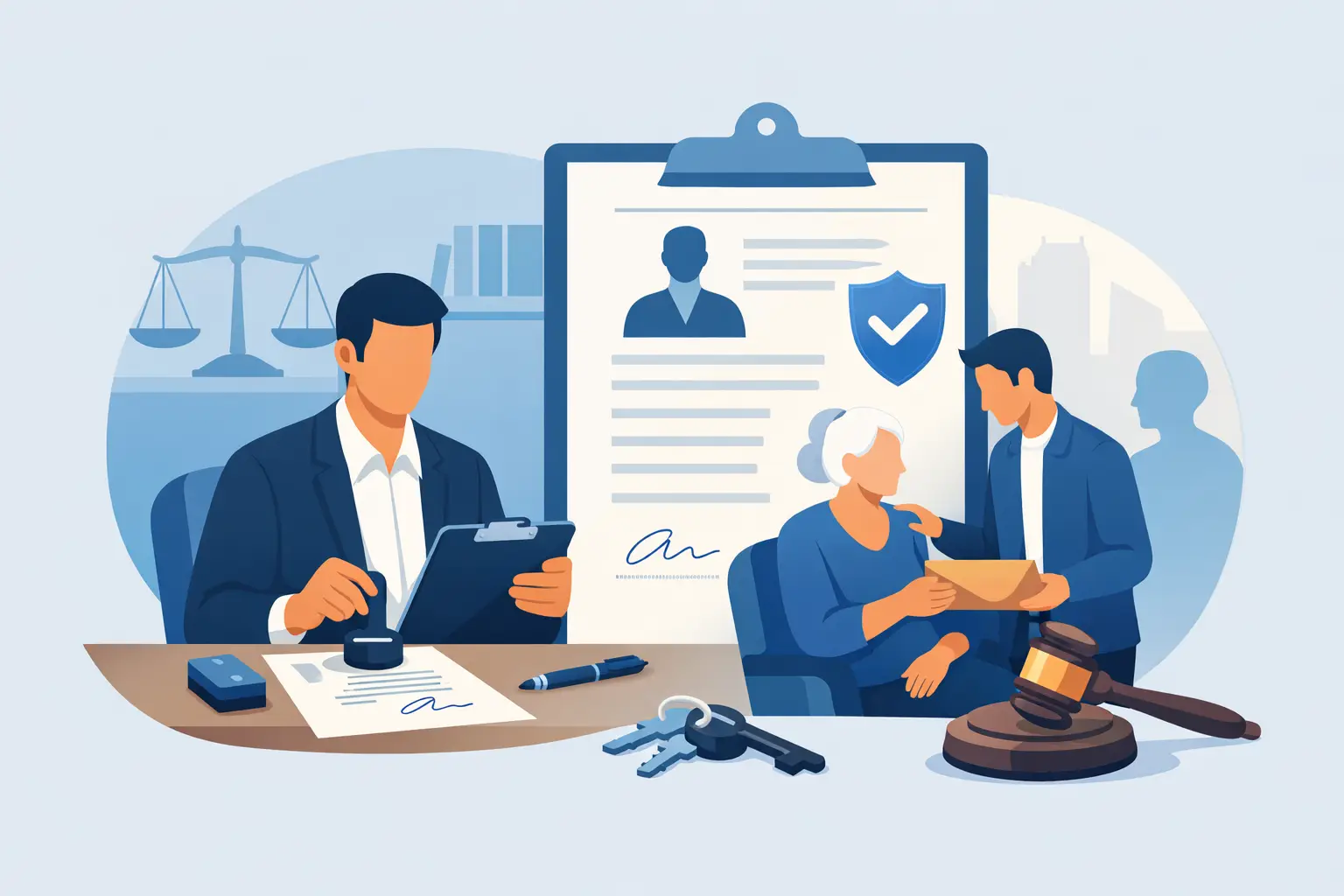
If you need someone to sell your property, handle a car transfer, sign business paperwork, or manage legal matters while you are away, the question usually comes up fast: can a notary do a power of attorney? The short answer is no, not in the way most people mean it. A notary can notarize a Power of Attorney, but the notary usually does not act as the lawyer who drafts, advises on, or customizes the document for your exact legal purpose.
That distinction matters more than most people realize. A Power of Attorney is only useful if it is written correctly, matches the transaction you need, and meets the legal standards of the country where it will be used. In UAE matters, a document that is vague, incomplete, or not prepared for the right authority can cause delays, rejection, or costly corrections.
Can a notary do a power of attorney, or only notarize it?
A notary’s core role is authentication. The notary verifies identity, confirms that the signer is acting voluntarily, and notarizes the document according to legal procedure. That is different from drafting the legal content itself.
So when people ask whether a notary can do a power of attorney, they are often combining two separate steps into one. Step one is preparing the POA in the right format, with the right powers, names, passport details, and transaction language. Step two is notarizing it so it becomes formally recognized.
In some simple cases, a notary office may provide a standard template. But a standard template is not the same as legal drafting. If your matter involves UAE property, company shares, inheritance-related administration, banking, court representation, or a cross-border signing process, relying on a generic form can be risky.
What a notary can do
A notary can play a critical part in the process. In practical terms, the notary can verify the signer, witness execution, notarize the POA, and in some jurisdictions record or register the act. That gives the document legal weight.
For UAE-related POAs, notarization is often mandatory. A Power of Attorney that has not been properly notarized may not be accepted by land departments, banks, courts, government entities, or other authorities. This is why clients often focus on the notarization step first.
But notarization does not fix a poorly drafted POA. If the powers are too broad, too narrow, or missing specific authority required for the transaction, the notary stamp alone will not solve that problem.
What a notary usually cannot do
A notary is generally not there to give full legal advice on what powers you should grant, whether a General POA or Special POA is safer, or how to structure the wording to satisfy a specific UAE authority. That work is legal drafting and document planning.
This is where many people lose time. They assume any notarized POA will work everywhere. Then they discover that a property sale POA needs precise wording, or that a business POA requires specific authority for licensing, shares, or representation. The document may be valid in a general sense but still unusable for the exact task.
That is why serious POA matters are usually handled as a guided process: drafting first, notarization second, and legalization or attestation after that if the document is signed outside the UAE.
Why Power of Attorney drafting is not just paperwork
A Power of Attorney is a legal authority document. Small drafting errors can create real problems. A misspelled name, incorrect passport number, outdated Emirates ID detail, incomplete property description, or weak statement of powers can lead to rejection.
The bigger issue is scope. If you give too little authority, your representative cannot complete the task. If you give too much, you may expose yourself to unnecessary risk. That balance depends on what you need done.
For example, a car POA is not drafted the same way as a property POA. A business POA is not the same as a personal administration POA. A POA for court representation differs again. Each one needs language that matches the intended use, and in the UAE, compliance with local notary and authority requirements is essential.
How the process works for UAE use
If your Power of Attorney will be used in the UAE, the process usually starts with identifying the purpose. Is it for property sale or purchase, vehicle registration, company matters, banking, family representation, or litigation support? Once the purpose is clear, the draft should be prepared accordingly.
After the draft is finalized, the signer completes notarization. If the person signing is in the UAE, this may happen through an approved online notary or other accepted notarization channel, depending on current rules and document type. If the signer is outside the UAE, the process may include notarization in the country of signing, then legalization or attestation so the POA becomes acceptable in the UAE.
This is where remote clients often run into confusion. The document may need translation, embassy-level steps, or Ministry-related processing before it can be used locally. The exact route depends on where it is signed and what authority in the UAE will receive it.
Can a notary do a power of attorney for property, cars, or business matters?
A notary can notarize POAs for those matters if the document is prepared correctly and meets the relevant procedural requirements. But the notary is not automatically the person who should decide how the powers are written.
Take property as an example. If you want someone to sell an apartment in Dubai while you are overseas, the POA may need specific powers for sale, transfer, signing before the land department, receiving sale proceeds, or appointing service providers. A generic POA might not be enough.
For car matters, the wording may need to cover sale, registration, deregistration, transfer, insurance-related steps, or traffic file procedures. For business matters, authority may need to be tailored to licensing, share transfers, banking, contracts, immigration, or government portal actions.
That is why the safer question is not simply whether a notary can do a power of attorney. The better question is whether the POA has been drafted for your exact UAE use case and then notarized in the right way.
When a standard POA may not be enough
Standard forms can work for straightforward situations, but not every case is straightforward. If you are a non-resident, own UAE property from abroad, need urgent execution, or are dealing with multiple authorities, the drafting needs more care.
There are also language issues. UAE authorities may require Arabic or certified legal translation alongside English documents, depending on the use case. If the translation is not aligned with the signed version, that can create another layer of delay.
Urgency adds pressure too. Many clients come to the process because a closing is scheduled, a tenant issue needs action, a vehicle must be transferred, or a company decision cannot wait. In those cases, speed matters, but legal compliance matters more. Fast processing only helps if the document is accepted the first time.
The practical answer for clients who need a UAE POA
If your concern is convenience, the right route is usually not to search for a notary alone. It is to use a service that handles the full chain – drafting, review, notarization support, translation if needed, and legalization steps where required.
That approach reduces the most common mistakes: using the wrong template, missing a required power, signing in the wrong format, or skipping a cross-border validation step. It also saves time for clients who cannot visit a court, notary office, or typing center in person.
For UAE matters, that end-to-end handling is often the difference between a document that is simply notarized and a document that is actually usable. UAE POA Online focuses on that exact gap by preparing POAs for specific UAE use cases and managing the remote notarization and compliance process with certified legal support.
So, can a notary do a power of attorney?
A notary can notarize a Power of Attorney, and that step is often essential. But a notary is not usually the full solution if you need the document drafted correctly, tailored to a UAE transaction, translated, legalized, or prepared for remote use from outside the country.
If your POA needs to work the first time, think beyond the stamp. The real priority is getting the right powers, the right format, and the right process for where the document will be used. That is what turns a signed paper into a legally recognized tool you can rely on when timing matters most.
Leave a Reply