
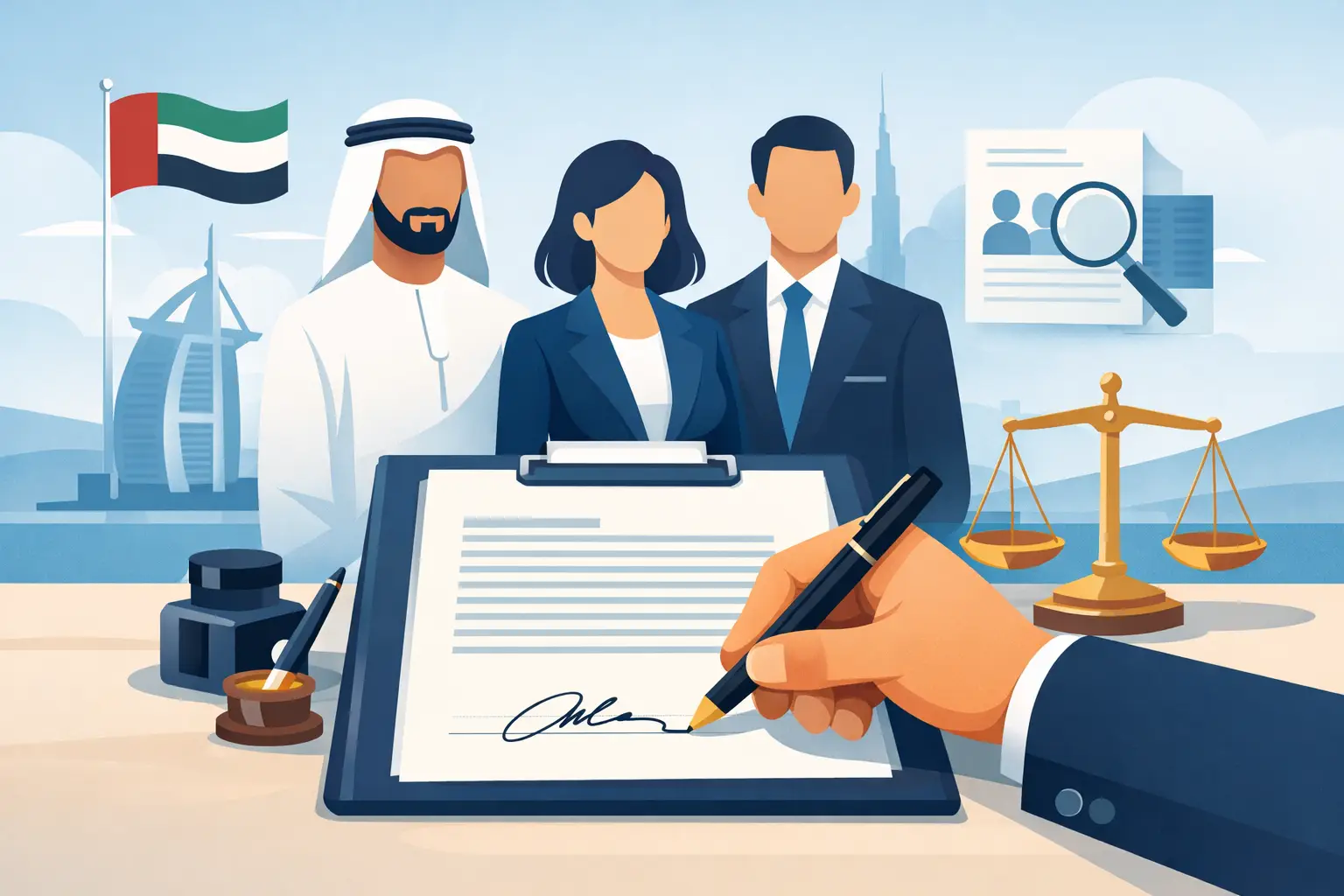
A will can fail at the point it is signed, even when every instruction in it is clear. For expatriates, property owners, and families with assets in the Emirates, understanding who can witness UAE wills is not a minor formality. The right witness depends on where and how the will is registered, and using the wrong person can create delay, rejection, or disputes when the document is needed most.
The practical answer is that there is no single witness rule for every UAE will. DIFC Wills, wills notarized through local UAE authorities, and wills prepared for different emirates can follow different procedures. The safest approach is to confirm the requirements of the authority that will register or notarize your will before arranging a signing appointment.
Who Can Witness UAE Wills?
For a DIFC will, the commonly applicable position is that the testator – the person making the will – signs in the presence of two witnesses. Each witness must generally be at least 21 years old and be physically present during the signing process. They must be able to understand the purpose of witnessing the document and provide valid identification.
A witness should be independent. In practical terms, do not choose a beneficiary named in the will, the beneficiary’s spouse, or a person who may gain from the estate. Even where a rule does not expressly invalidate every gift in such circumstances, using an interested witness creates an avoidable risk. A neutral colleague, friend, or professional who is not included in the will is usually the cleaner option.
For wills handled through Dubai Courts, Abu Dhabi judicial channels, or UAE notary procedures, the process may differ. In some cases, formal notarization and the authority’s verification process may be the key validity requirement rather than a standard two-witness signing arrangement. The notary or relevant court authority may also impose its own identity, language, attendance, and document requirements.
That distinction matters. A person who is acceptable as a DIFC witness is not automatically the answer for a will submitted through another UAE registration route.
Basic Qualities of a Suitable Witness
Although the exact rules depend on the will service and jurisdiction, a suitable witness should normally be an adult with legal capacity, able to understand what they are witnessing, and able to present original valid ID when requested. The witness should attend the signing in the required manner, rather than signing later or confirming the event informally.
Independence is equally important. Your executor may have a separate role from a witness, and the eligibility of an executor to witness can depend on the particular will framework and its rules. Where there is any uncertainty, appoint a separate independent witness. This avoids giving a future executor, beneficiary, or family member an unnecessary reason to challenge the process.
A witness does not need to know the details of your assets, family arrangements, or distributions. Their function is usually to confirm that you signed the will voluntarily, that the signing took place in their presence, and that you appeared to understand what you were doing. Confidentiality still matters, particularly where the will addresses business shares, UAE real estate, guardianship, or complex family arrangements.
Witness Requirements for DIFC Wills
DIFC Wills are widely used by non-Muslims with UAE-based assets because they offer a structured English-language route for recording succession wishes. The DIFC Wills Service Centre has specific procedural standards, so a will should be prepared with those standards in mind from the start.
As a general rule, plan for two independent witnesses aged 21 or older. Bring witnesses who can attend the appointment or approved signing process, carry valid identification, and are not beneficiaries under the will. Avoid assuming that a video call, scanned signature, or a witness who signs on a different day will be accepted. Remote and electronic procedures can change, and they must be used only where the relevant authority expressly permits them.
If your intended witness is your adult child, spouse, business partner, employee, or close friend, the key question is not simply whether they know you. Ask whether they have any direct or indirect interest in the will. A witness who receives property, money, company shares, or another benefit is a poor choice. The same caution applies where the witness is connected to someone receiving a benefit.
Notarized Wills and Local UAE Procedures
A will intended for notarization or registration outside the DIFC should not be treated as a DIFC will with a different cover page. The authority may require the testator’s personal appearance, Emirates ID or passport, Arabic legal translation, legalized supporting documents, or a particular signing format.
Witnesses may be required in some circumstances, while in others the notary’s official authentication process may satisfy the relevant formalities. Requirements can also depend on the testator’s nationality, religious status, residency, the location of assets, and whether the will covers property, bank accounts, company interests, guardianship, or movable assets.
For this reason, do not invite two friends to act as witnesses before confirming the registration route. First decide where the will will be recorded. Then prepare the document in the required language and format. Finally, arrange the right people and identification for the appointment. This order saves time and prevents an urgent signing from becoming a repeat visit.
Can Family Members Witness a UAE Will?
A family member may be legally capable of witnessing in certain settings, but that does not make them the preferred choice. If a family member is named as a beneficiary, guardian, executor, or otherwise has an interest in the estate, selecting them as a witness can cause complications.
The most reliable choice is an independent adult who receives no benefit under the will and has no close financial connection to a beneficiary. For many clients, this may be a trusted colleague or two independent friends. If privacy is a concern, professional support can help organize a compliant signing process without disclosing more personal information than necessary.
Do not confuse a witness with a legal representative or a Power of Attorney holder. A person authorized under a POA may manage a specific transaction during your lifetime, but a POA normally ends upon death. A will deals with what happens after death and must meet its own legal and registration requirements.
What Witnesses Need to Bring and Do
Witnesses should be prepared before the appointment. They will commonly need a valid passport, Emirates ID if applicable, or other approved photo identification. The authority may request contact details and may check that their names match the will and signing records exactly.
At signing, they should be present as required, observe the testator signing, and sign where instructed. They should not sign a blank or incomplete document. The final will should already contain the correct names, asset descriptions, appointment details, and pages. Last-minute handwritten edits can introduce uncertainty, especially if they are not properly acknowledged by every required signatory.
If the will is in English but a party needs Arabic translation or interpretation, arrange that support in advance. A person should never sign as a witness without understanding the nature of the act they are confirming. Certified legal translation is also often essential when supporting documents originate outside the UAE or will be presented to a local authority.
Common Witnessing Mistakes That Cause Delays
The most frequent issue is choosing a beneficiary as a witness because they are readily available. Other avoidable errors include using witnesses who are under the required age, arriving without valid ID, signing at different times, or using a document that does not match the authority’s required version.
Cross-border situations require extra care. An overseas property owner may assume that a witness who signed in the United States or another country can be used for a UAE will without further formalities. That may not work. The UAE authority’s rules, the location of signing, notarization requirements, and legalization of documents can all affect whether the document is accepted.
A will should also be reviewed after major life changes: marriage, divorce, birth of a child, purchase or sale of UAE property, relocation, or a change in company ownership. Updating the wording without properly re-executing the will can be as risky as never updating it at all.
Get the Signing Route Right Before You Book
The witness question is only one part of a legally effective UAE will. The will must also use the correct registration channel, reflect applicable UAE succession rules, identify assets accurately, and be executed in the prescribed format. For Muslim testators, succession and testamentary rules can involve additional considerations, including restrictions on bequests and the rights of legal heirs.
UAE POA Online can help clients coordinate document-sensitive UAE legal services with clear guidance on preparation, certified translation, and the appropriate signing or notarization process. The goal is not simply to obtain signatures quickly. It is to ensure that the people signing, the document they sign, and the authority receiving it all align.
Before asking anyone to witness your will, confirm the will type, registration authority, current requirements, and each witness’s independence. That small check can protect your family from a much larger problem later.
Leave a Reply