
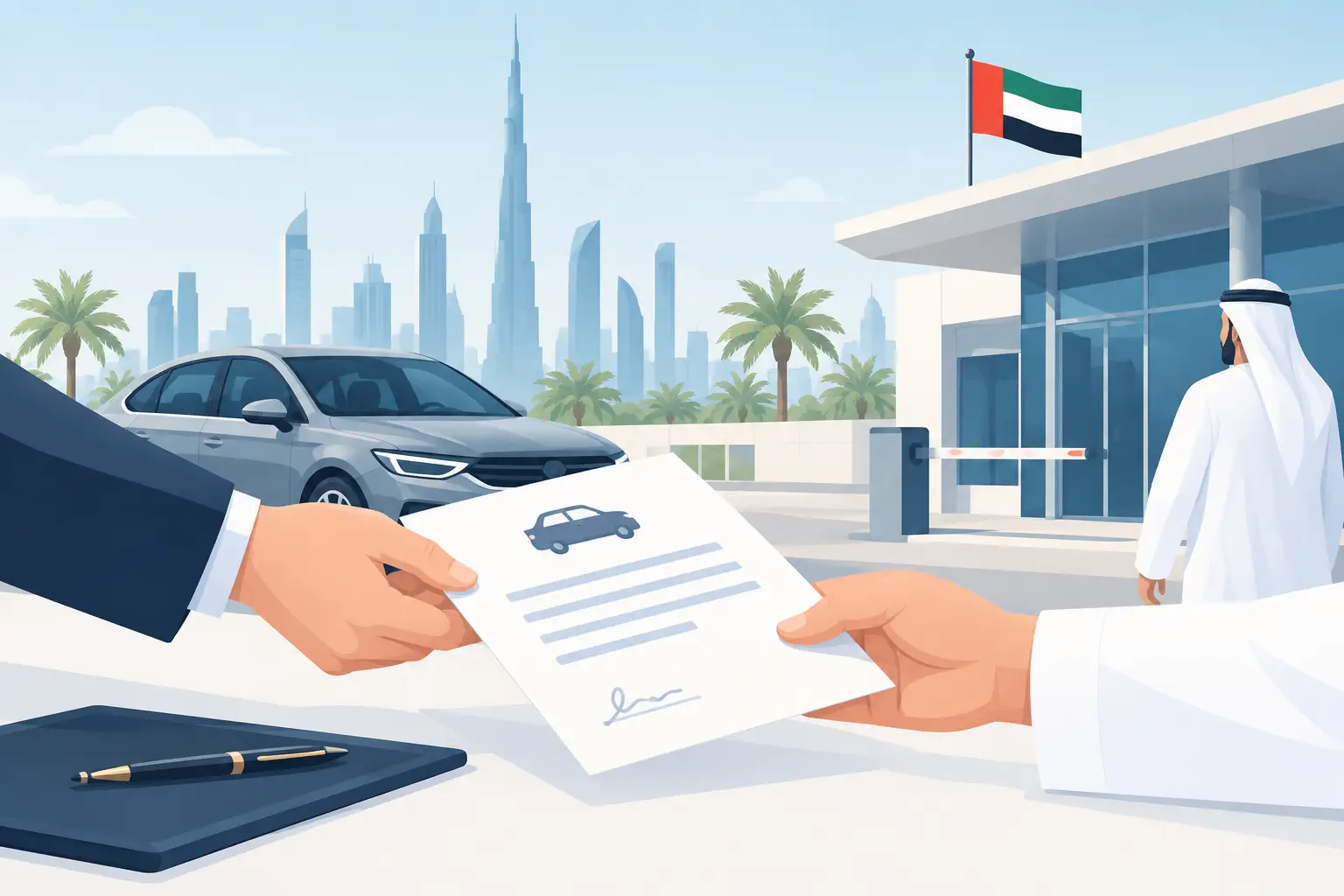
A vehicle transaction can stop quickly when the registered owner is overseas, traveling, or simply unavailable to attend in person. The short answer to the question, “is car POA accepted RTA,” is yes, a properly prepared and notarized Car Power of Attorney can generally allow an authorized representative to complete eligible RTA vehicle services in Dubai. However, acceptance depends on the POA wording, the transaction, the vehicle’s status, and the documents presented on the day.
A Car POA is not a general shortcut around RTA requirements. It proves that someone has authority to act for the owner. The vehicle must still meet the applicable transfer, registration, insurance, inspection, finance, and clearance conditions.
Is a Car POA Accepted by RTA?
RTA, the Roads and Transport Authority in Dubai, may accept a UAE-notarized POA for vehicle-related transactions when it clearly gives the attorney-in-fact authority to act on the owner’s behalf. In practical terms, this can include signing forms, submitting documents, completing ownership transfer formalities, and dealing with the relevant service center or approved channel.
The key word is clearly. A vague POA that merely authorizes someone to handle “all matters” may not be sufficient for a sensitive vehicle sale or transfer. The authority should match the task the representative needs to perform. If the owner intends to sell a specific car, the POA should expressly cover sale and transfer authority, ideally with the vehicle details included where appropriate.
RTA procedures and counter requirements can change, and the final decision is made by the relevant authority or service channel. That is why a document prepared for the actual transaction is safer than reusing an old general POA.
What Makes a Car POA More Likely to Be Accepted?
A legally valid POA starts with correct execution and notarization. For UAE-issued documents, this normally means completing the document through the appropriate UAE notarial process. Where the owner is outside the UAE, the document may require a different route, such as notarization in the country of signing, legalization or attestation through the required authorities, and certified legal translation into Arabic when needed.
The wording should identify the principal, meaning the vehicle owner, and the appointed representative. It should then state the vehicle powers with enough detail to remove doubt. Depending on the transaction, those powers may cover selling, purchasing, transferring ownership, registering or renewing registration, collecting documents, signing related applications, and receiving proceeds from a sale.
For a vehicle sale, useful details can include the make, model, plate number, chassis number, and ownership information. Not every POA requires every detail, especially where the authority is meant to cover future vehicle purchases or multiple vehicles. Still, specificity reduces the chance of a service center questioning whether the representative can act for that exact vehicle.
A well-prepared Car POA should also avoid conflicting limits. For example, a document that grants authority to renew registration but says nothing about sale or ownership transfer should not be relied on for a sale. Similarly, authority to manage a vehicle does not automatically mean authority to receive sale funds or sign a buyer’s transfer agreement.
A POA Does Not Replace Vehicle Eligibility Requirements
This distinction matters. Even a fully notarized Car POA cannot make an ineligible vehicle transferable. RTA and related service channels may still require the registered vehicle file to be clear before proceeding.
For example, the representative may need to address outstanding traffic fines, active financing, a bank mortgage or lien, expired registration, insurance requirements, or a required vehicle inspection. If the vehicle is under finance, the lender’s release is commonly needed before ownership can be transferred. If the buyer or seller has identity or account requirements, the POA does not remove those requirements either.
The representative should also carry the required supporting documents, which may include the original or verified digital POA, Emirates ID or passport documents, the vehicle registration card, insurance evidence, and any clearance or inspection records relevant to the transaction. The exact document set depends on whether the task is a sale, transfer, registration renewal, replacement card request, or another RTA service.
When a General POA May Not Be Enough
A General POA can be useful for broad legal and administrative representation, but vehicle transactions often deserve a dedicated Car POA. This is particularly true when the owner is abroad, the transaction involves a high-value vehicle, or the representative will sell the vehicle and receive payment.
A specific Car POA gives the authority reviewing the file a direct answer to the central question: does this person have permission to complete this vehicle transaction? It also helps protect the owner by limiting the representative’s authority to stated acts, vehicles, or time periods where needed.
For owners who want to authorize only a registration renewal, a limited POA can be the better choice. For an owner selling one identified vehicle, a sale-and-transfer POA is usually more appropriate than a document granting broad control over all assets. The right option depends on the scope you genuinely need, not on the longest possible document.
Using a Car POA While You Are Outside the UAE
Many UAE vehicle owners are overseas when a sale, transfer, or registration matter arises. Remote preparation can solve the practical problem, but the execution route must be correct. A POA signed abroad may need to be notarized locally and then legalized for use in the UAE. Arabic translation may also be required if the original document is in another language.
This process can take longer than expected if the owner waits until a buyer is ready. A missing attestation, an outdated passport copy, or wording that does not mention transfer authority can delay the transaction at the last stage. Preparing the POA before listing the vehicle or scheduling a transfer is usually the more efficient approach.
For urgent matters, UAE POA Online can help prepare a Car POA aligned with the intended transaction and guide clients through notarization, legalization, and translation requirements. The objective is simple: a legally recognized document that is ready for the authority process, without unnecessary visits or unclear wording.
Check These Points Before Sending Your Representative
Before the representative attends an RTA service center or starts an online process, confirm four practical points:
- The POA is valid, properly notarized, and has not expired or been revoked.
- The POA expressly covers the exact action, such as sale, ownership transfer, registration, or renewal.
- The vehicle has no unresolved finance, fines, inspection, insurance, or registration issues that could block the service.
- The representative has the POA and all supporting identity and vehicle documents required for the selected transaction.
Also remember that a POA generally ends if it is revoked by the principal, expires under its terms, or is affected by legal events that end the authority. Do not assume a document signed years ago remains usable. Review its date, scope, and legal status before relying on it.
RTA in Dubai Versus Other Emirates
“RTA” specifically refers to Dubai’s Roads and Transport Authority. Vehicle services in Abu Dhabi, Sharjah, and other Emirates may be handled through different authorities, police platforms, or approved service centers. A UAE-notarized Car POA may still be relevant, but the process, portal rules, required documents, and acceptance checks can differ.
If the vehicle is registered outside Dubai, prepare the POA for the authority that will handle the transaction rather than assuming Dubai wording will fit every case. This is especially relevant for cross-emirate transfers, vehicles with company ownership, or documents issued outside the UAE.
A Car POA can make an otherwise difficult vehicle matter manageable from anywhere, but it works best when it is drafted for one clear purpose and checked before the transaction begins. That preparation gives your representative the authority they need and gives you greater confidence that the vehicle process will not be delayed by a preventable document issue.
Leave a Reply